Tuesday, September 22, 2026

Historical Anti Slavery Activist: Abby Kelley Foster

MHS Collections Online: Abby Kelley Foster

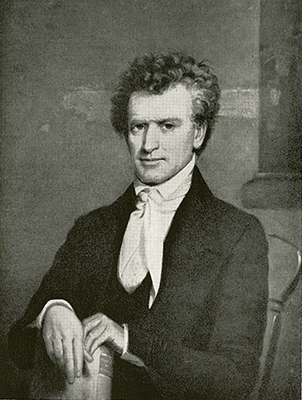
 The Woman Who Split The Abolitionist Movement And Never Apologized For It

Abby Kelley Foster

Good morning everyone, 
 My name is Abby Kelley Foster and I am here tonight because I believe that I have a responsibility to speak about slavery, not tomorrow, not when it becomes convenient, but now. 

 I know that some of you may ask, "why should we involve ourselves in this issue? Why should we challenge something that has existed for generations?"

 My answer is simple: because slavery is wrong. 

 I have spent years traveling throughout this country, speaking to communities about slavery. I have seen how uncomfortable this subject makes people. I have heard the arguments that slavery is necessary, that it is part of our economy, that it is protected by law, or that ending it would cause too much disruption. 

But I ask you: Since when does something become right simply because it is profitable, legal, or traditional? A human being cannot be property. 

When I first began speaking publicly against slavery, I was told that a woman should not stand before an audience and speak about political or social issues. But I could not remain silent. I stood before audiences because I believed that if I knew something was wrong, I had a responsibility to speak about it.

And that is what I ask of this town tonight: to look at the reality of slavery

Enslaved people are denied their freedom. Families can be separated. People are forced to work without the ability to control their own lives. They are treated as property rather than as human beings.


How can we call ourselves a nation founded on liberty while millions of people are denied that liberty?

Some may say, “But what can one person possibly do?”

I understand that question because I have asked it myself.

My answer has always been: act.

I once said, “I have no weapon but the gospel of truth in its simplicity.” I did not have political office or great wealth. What I did have was a voice, and I decided to use it.

 I have written petitions. I have raised money. I have traveled from community to community. I have spoken to people who disagreed with me. I have faced angry crowds and hostility. Yet I continued speaking.

Why?

Because I believe silence helps injustice continue.

And I do not believe that ending slavery should be postponed simply because the task is difficult.

We have to create a society where freedom is not reserved for some people while denied to others. I believe African Americans deserve not merely freedom from slavery, but the same rights and opportunities as white Americans. That belief is central to the abolitionist cause.

So tonight, I am asking this community to consider what side of history we want to stand on.

Do we want to defend a system simply because it has existed for a long time?

Or do we want to challenge it because we recognize that human beings deserve freedom?    

I have learned that change does not happen because people sit quietly and wait for someone else to act. It happens because ordinary people decide that they will no longer accept injustice.

Years ago, I said, “Action, action, is eloquence!” I believe those words apply to the fight against slavery as well. It is not enough to say that slavery is unfortunate. It is not enough to privately disagree with it. If we truly believe slavery is wrong, then our actions must demonstrate that belief.

So I ask you tonight: Will you speak? Will you petition? Will you support the abolitionist cause? Will you challenge the people and institutions that continue to defend slavery?

The choice is yours.

But I believe that someday, people will look back on this period and ask how a nation that claimed to value liberty could allow slavery to continue.

I want us to be able to say that when we recognized the injustice, we did not turn away.

We acted.

We spoke.

And we fought for freedom.

Thank you.

Sources:

https://www.ebsco.com/research-starters/biography/abby-kelley-foster

https://socialwelfare.library.vcu.edu/womens-suffrage/kelley-abby/

AI DISCLOSURE: AI was used to help shape my blog post into a professional speech. I used Claude AI to help format my research into a script for my town hall meeting which I then incorporated into my blog post. 


Mock Trial Notes

 State Vs Mann and the Question of Freedom 

Primary Source: North Carolina v. Mann, 1829 | ANCHOR

Listening to the mock trial surrounding State v. Mann provided an opportunity to examine the complicated relationship between law, slavery, morality, and individual rights in nineteenth-century North Carolina. The case, which was heard by the Supreme Court of North Carolina, centered on John Mann, a white slave owner, and Lydia, an enslaved woman. The trial demonstrated how the legal system of the time treated enslaved people as property while also raising larger questions about justice and human rights.

According to the case presented in the mock trial, Mann shot Lydia after she attempted to escape from him. Lydia had been enslaved by another person and was reportedly upset with Mann before attempting to run away. After the incident, Mann was charged with assault and fined five dollars. Mann appealed the decision, arguing that requiring him to pay the fine was unfair and that the state had interfered with his rights as a slave owner.

During the mock trial, the state's arguments focused on the changing social and moral attitudes of the 1830s. This period was characterized by what the state described as a growing moral awakening. Religion played an important role in these discussions, particularly as religious communities became increasingly involved in debates surrounding slavery and abolition. Churches, town meetings, and other community gatherings created spaces where individuals could reflect on morality and demonstrate what the state characterized as moral courage. The state also argued that slavery negatively affected broader economic development, making the institution not only a moral issue but also a social and economic concern.

Mann's lawyers presented a very different argument. Their position was based largely on the legal status of enslaved people at the time. They argued that enslaved people were legally considered property and therefore did not possess the same rights recognized for free individuals. From this perspective, property could not experience pain or possess human rights in the same way a person could. This argument illustrated how the law was used to define and restrict the rights of enslaved individuals.

The mock trial was especially significant because it demonstrated the tension between the legal system and changing ideas about morality and human dignity. While the law treated enslaved people as property, the arguments presented in the case forced participants to consider whether legal definitions could justify the treatment of human beings. The contrast between the state's arguments and Mann's legal defense also showed how difficult it was to separate the law from the social values of the period.

Overall, the mock trial provided a valuable way to understand State v. Mann beyond simply reading about it in a textbook. Hearing competing arguments made the historical conflict more concrete and demonstrated how questions about slavery, property, morality, and human rights were debated through the legal system. The experience emphasized the importance of examining historical cases within their broader social and political context while considering how ideas about justice and individual rights have changed over time.

AI DISCLOSURE: AI was used to help me shape my notes into this blog post. I used Claud AI to help format my notes on the mock trial that was being presented, and shape them into a formal blog post.

Sunday, September 13, 2026

Missouri Compromise

Missouri Compromise of 1820: Annotated - JSTOR Daily

The Missouri Compromise of 1820: A Deal That Bought Time

What Was Going On Before 1820?

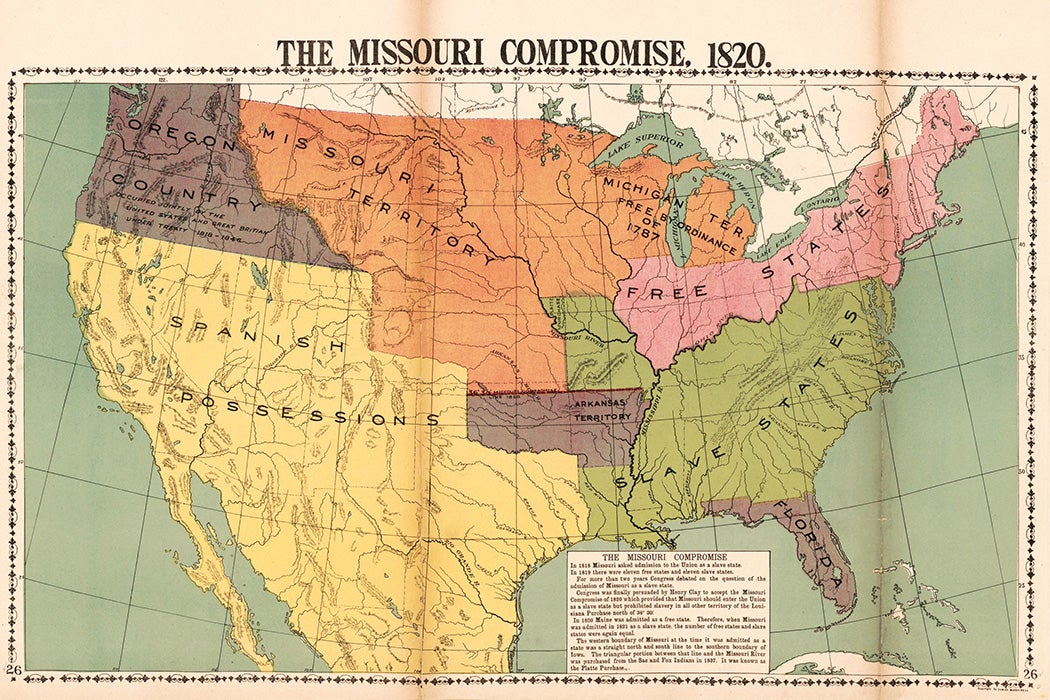
In 1819, the United States had 22 states. Eleven of them allowed slavery, and eleven did not. This even split mattered a lot because of how the Senate works. Every state gets two senators, no matter how big or small it is. So as long as the number of slave states and free states stayed equal, neither side could outvote the other in the Senate.

Then Missouri wanted to join the country as a new state. Missouri was part of the huge Louisiana Purchase, and by 1818, many enslaved people were already living there. If Missouri joined as a slave state, the South would suddenly have more power in the Senate than the North. This made a lot of Northern lawmakers nervous.

The Fight in Congress

In 1819, a congressman named James Tallmadge came up with an idea called the Tallmadge Amendment. It would have slowly ended slavery in Missouri. The House of Representatives, where the North had slightly more votes, actually passed this amendment. But the Senate, where slave states and free states had the exact same number of votes, rejected it. Congress got completely stuck. Nobody could agree, and the country was heading toward a real crisis.

Henry Clay's Solution

Henry Clay, who was the Speaker of the House at the time, came up with a plan to fix the problem. People later nicknamed him "The Great Compromiser" because of deals like this one. His plan had three main parts:

  1. Missouri would join the country as a slave state.
  2. Maine, which used to be part of Massachusetts, would join at the same time as a free state. This kept the number of slave states and free states equal.
  3. A senator named Jesse Thomas added one more rule. He drew an imaginary line across the rest of the Louisiana Purchase land at 36 degrees 30 minutes latitude. North of that line, slavery would be banned forever, except in Missouri. South of that line, slavery would still be allowed.

President James Monroe signed this plan into law in March 1820.

There was actually one more twist. Later that year, Missouri wrote its state constitution, and it tried to ban free Black people from even entering the state. This made Congress angry all over again, and Henry Clay had to step in a second time to fix things. Missouri finally became an official state in August 1821.

Why Does This Matter?

At first, the Missouri Compromise did what it was supposed to do. It stopped the fighting and gave the country clear rules about slavery in new territories for over 30 years. But it did not actually solve the real problem. It just pushed the problem down the road.

Thomas Jefferson, who was retired by this time, said the debate felt like "a fire bell in the night." He meant that it scared him because it felt like a warning sign of something much worse coming later. He turned out to be right.

The 36°30′ line eventually fell apart. In 1854, a new law called the Kansas-Nebraska Act basically canceled it. Then in 1857, the Supreme Court ruled in the Dred Scott case that the whole compromise had been unconstitutional in the first place.

Looking back, the Missouri Compromise is important not because it fixed anything, but because of what it showed. It proved that the North and South were becoming more divided over slavery, and it was one of the first big warning signs pointing toward the Civil War.


AI DISCLOSURE: AI was used to help me organize my research in this assignment. I used Claud AI to help me clean my text for grammar, spelling, and punctuation. I also asked AI to help me shape it into the form of a blog post. I then edited the text, added links, and added images and the caption. I also asked AI to organize my research into a formal blog post. 

Thursday, September 10, 2026

Eight Values of Free Expression

Eight Values of Free Expression 

Individual Self-Fulfillment 

Creating the space to think | Julian Stodd's Learning Blog

    Individual Self Fulfillment is the lifelong process of achieving your deepest desires and goals, willingly and freely, reaching your fullest potential and capacity, and living a satisfying life defined by your own authentic values and morals, disregarding external and/or government expectations within a society. 

    I chose this particular value of free expression because I think it truly resonates with our society today. I think less government involvement in people's personal lives and having the right to autonomy is crucial to people ultimately getting to live the life they choose. 

    When I think about individual self-fulfillment, I think about having the freedom to decide what kind of life I want to live. To me, self-fulfillment means being able to make my own choices, pursue my goals, and feel like I have control over my future. However, I also think that society and government have a major impact on how much freedom people actually have to achieve self-fulfillment.


    Society influences us from a very young age. We are taught what is considered successful, acceptable, or normal. For example, society often tells us that we should go to college, get a good job, make money, buy a house, and start a family. There is nothing wrong with those things, but I think the problem happens when people feel like they have to follow the same path to be considered successful. I believe everyone should have the ability to decide what success means to them instead of feeling pressured to meet society's expectations.


    Government also plays an important role in individual self-fulfillment because it creates laws and policies that can either protect or limit people's freedom. I think one of the government's most important responsibilities is protecting individual rights. People should be able to express their opinions, practice their beliefs, choose their careers, and make decisions about their own lives as long as they are not harming others. Having these freedoms gives people more opportunities to pursue the things that make their lives meaningful.


    At the same time, I do not think individual freedom means that people should only care about themselves. Living in a society means that our choices can affect other people. For example, laws against violence and discrimination limit certain behaviors, but they also protect people's ability to live safely and freely. I think there needs to be a balance between individual freedom and the needs of society as a whole.


Economic opportunities are another major factor. It is difficult for someone to pursue their goals if they do not have access to education, healthcare, or basic economic opportunities. This makes me think that government has a role in creating a society where people have a fair chance to succeed. The government cannot guarantee that everyone will have the same outcome, but it can help make sure people have opportunities to work toward their own goals. 


    Overall, I believe individual self-fulfillment depends on both personal choices and the society we live in. I am responsible for making decisions about my own life, but the laws, culture, and opportunities around me can make those decisions easier or harder. As a college student, I am still figuring out what I want my future to look like.


 I think a good society is one that gives people enough freedom to create their own path while also making sure that everyone's basic rights are respected. To me, that balance between individual freedom and responsibility to others is an important part of what makes a society successful.

Tuesday, September 8, 2026

Bible & Slavery Condemn vs Condone


what are your thoughts on slavery in the bible? and what do you think about  the message in this image? i did not create this image, and i know this is  not "


The Bible and Slavery: Condemn

  •    First, the bible teaches that all human beings have equal value. Presuming some human beings are less valuable than others because of their appearance, their beliefs, or ethnicity is, of course, an unbiblical concept. The bible teaches that every human is valuable for one reason and we all have this one thing in common: Each person is made in the image and likeness of God. 

    When people talk about the Bible and slavery, it can be confusing because the Bible does not simply say, “Slavery is always wrong” in one clear sentence. In fact, there are passages in the Old Testament that give rules about slavery. However, when the Bible is looked at as a whole, there are strong reasons to believe that slavery goes against its main teachings about human value, freedom, and how people should treat each other.

    One important reason is that the Bible teaches that every person is made in the image of God. Genesis 1:27 says that God created human beings in his image. This means that people have value because of who they are, not because of their social status or how useful they are to someone else. Slavery treats people like property that can be bought and controlled. This goes against the idea that every human being has God-given worth.


    Another reason is the Bible’s story of the Israelites being freed from slavery in Egypt. In the book of Exodus, the Israelites are forced to work for Pharaoh, and God hears their cries and delivers them from slavery. This becomes one of the most important stories in the entire Bible. It shows God as someone who cares about oppressed people and wants them to be free from cruel treatment. It would be strange to say that slavery is morally good when one of the Bible’s biggest stories is about God rescuing people from it.


    Jesus’ teachings also support this idea. Jesus teaches people to love their neighbors as themselves. He also gives what is often called the Golden Rule: people should treat others the way they would want to be treated. It is difficult to see how owning another person could fit with these teachings. If Christians are supposed to love and respect other people, slavery clearly creates a major problem.


    The New Testament also says that in Christ, social differences should not determine a person’s worth. Galatians 3:28 says that there is “neither slave nor free” because believers are all one in Christ. The apostle Paul also tells Philemon to receive Onesimus, who was enslaved, as a brother. While these passages do not give a direct political command to abolish slavery, they challenge the idea that one person is naturally more valuable than another.


    Overall, the Bible’s teachings about human dignity, freedom, love, and equality provide a strong argument against slavery. Some biblical passages reflect the ancient societies in which they were written, which makes the subject complicated. Still, the Bible’s larger message points toward treating every person as someone made in God’s image rather than as property. For that reason, Christians have good reason to believe that slavery is fundamentally inconsistent with biblical principles.


1. Exodus 21:16 :  Condemns Human Trafficking and Slave Trading

"Whoever steals a man and sells him, and anyone found in possession of him, shall be put to death." bibleweb.org, biblerepository.com

  • The severe penalty for man-stealing, which was a form of kidnapping and selling into slavery, shows a strong condemnation of the trade of human beings. 

  • This law makes kidnapping a person and selling them into slavery a capital crime.

  • The transatlantic slave trade depended on the capture and sale of human beings, which would fall under the type of "man-stealing" condemned here.

  • Many Christian abolitionists cited this verse as evidence that chattel slavery violated biblical law.

Example: If a person were abducted from their home and sold as property, the Bible explicitly treats the kidnapper as a criminal deserving severe punishment. bibleweb.org, biblerepository.com

2. Deuteronomy 23:15-16 : Protects Escaped Slaves

"If a slave has taken refuge with you, do not hand them over to their master." biblestudytools.com

  • Ancient societies commonly required runaway slaves to be returned.

  • This law does the opposite: it tells Israelites not to return an escaped slave.

  • The passage continues by allowing the escaped slave to live where they choose rather than forcing them back into servitude.

Example: Unlike later fugitive slave laws in some countries, this biblical command instructs people to offer protection rather than return an escaped person to bondage. biblestudytools.com

3. 1 Timothy 1:9-10 : Condemns Slave Traders

Paul lists among serious sinners "slave traders" (or "kidnappers" in some translations). biblerepository.com

  • Paul includes slave traders in a list of behaviors contrary to sound doctrine.

  • This is one of the clearest New Testament condemnations of the business of buying and selling people.

Example: Someone who profits from the capture and sale of human beings is explicitly condemned in this passage. biblerepository.com

  • ARGUMENT ON BOTH SIDES: 

    • Scripture mentions that humans can be slaves to sin itself, consumed by their passions and desires. 

Tuesday, September 1, 2026

Supreme Court Video Reflection

   After watching the video about the U.S Supreme Court, I took away a better understanding of just how much influence this institution has on American life. The United States Supreme Court is the most powerful Judicial body, and the highest court in the country. Its decisions can affect everyone in our population, not just those involved within a certain case. 

    The court's main role is to interpret the Constitution and determine whether laws and government actions follow it. One of the most interesting aspects of the Supreme Court is its power of Judicial Review. This allows the court to declare laws or executive actions, as constitutional. Although this power is not specifically written in the Constitution, it became established through Marbury V Madison in 1803. This decision helped shape the court into an important check on the other branches of government as well as gaining the respect of the public opinion. 

    The court currently has nine justices. One Chief Justice and eight Associate Justices. They are nominated by the president and must be confirmed by the senate. During federal cases, all justices meet to vote on a case to discuss the outcome, one justice is assigned to an opinion to explain the reasoning behind that decision. However, any justice can declare a separate opinion. Compromise is always inevitable involving any court case. The overall power of the court, is the power of trust earned. 


Historical Anti Slavery Activist: Abby Kelley Foster

 The Woman Who Split The Abolitionist Movement And Never Apologized For It Abby Kelley Foster Good morning everyone,    My name is Abby Kell...